Some links are Amazon affiliate links. As an Amazon Associate I earn from qualifying purchases.
Packing for the Sunshine Coast Trail
Checklist
Six categories, 34 items: pack and sleep, water and food, clothing and feet, navigation and safety, camp and hygiene, and dog gear. Adjust it for your route, season, group and dog, then print it or save it to your phone.
What I carried
This was my setup for a 2026 thru-hike. Choose gear for your fit, season and route.
Pack and sleep
- I carried an IX INOXTO 55 L pack and a two-person tent for me and my dog.
- I used a −7°C (20°F) sleeping bag, liner and inflatable pad. Hut bunks are wooden platforms.
- My pad was heavy and loud on hut platforms. I would replace it with a lighter, quieter one.
- I carried a tent because hut platforms are first-come. Check camping options for each planned stop.
Water and food
- I carried containers with 3 L total capacity and filled them according to the next dry stretch. That is less than this trail asks for. Manzanita and Tin Hat are dry camps, and the note on Tin Hat says 4–5 L, or 6 L above 24°C, because the top is exposed. Carry the larger number rather than mine.
- I filtered water from lakes, creeks and hut barrels, and carried a backup treatment method for when a filter clogs or freezes.
- Some huts have no cache. Existing caches may be full or damaged. Bring your own food-storage setup.
- Plan food by days and include one extra day. Confirm any resupply arrangement directly before leaving.
Cooking
- I cooked on a canister stove and carried one fuel canister for the trip. Stove, pot and fuel came to about 1.5 lb.
- I carried a second cook pot and never used it. One pot is enough for one person.
- The only fuel stocked anywhere near the route is in Powell River. Carry what the whole trip needs, and buy the canister after you land — airlines do not carry them in checked or cabin baggage.
Clothing and feet
- Quick-dry hiking layers, dry sleep layers, a rain shell and a thin insulating layer.
- I carried two or three pairs of wool socks. Carry blister care and treat hot spots early.
- I wore Merrell Moab 3 waterproof mids. Break in your footwear before the hike.
- I used gloves in July and carried a swimsuit for lake swims.
Navigation and safety
- Download offline maps before leaving signal and carry backup route information.
- Much of the trail is under tree cover. Carry a battery bank and do not rely on solar charging.
- Carry a headlamp, first-aid kit, repair kit and your own medications.
- Carry bear spray where you can reach it and know how to use it. Bear spray and fuel cannot travel on a commercial flight, including checked baggage.
- I used a watch to record my route. A satellite communicator can send an SOS without cellular service. Confirm its subscription is active before leaving.
Small items
- Trekking poles, a quick-dry towel, trowel, hand sanitiser, sunscreen, insect repellent, lip balm and a hat.
- Pack liner, dry food bag, cord, tape, blunt-tip scissors and a small sewing kit.
- Use small amounts of biodegradable soap at least 60 m (200 ft) from lakes and streams.
Dog
- Bring the dog’s food, water capacity, bowl, leash, sleep setup and first-aid supplies. DEET repellents are toxic to dogs. Ask your vet about nutrition, medication and insect protection.
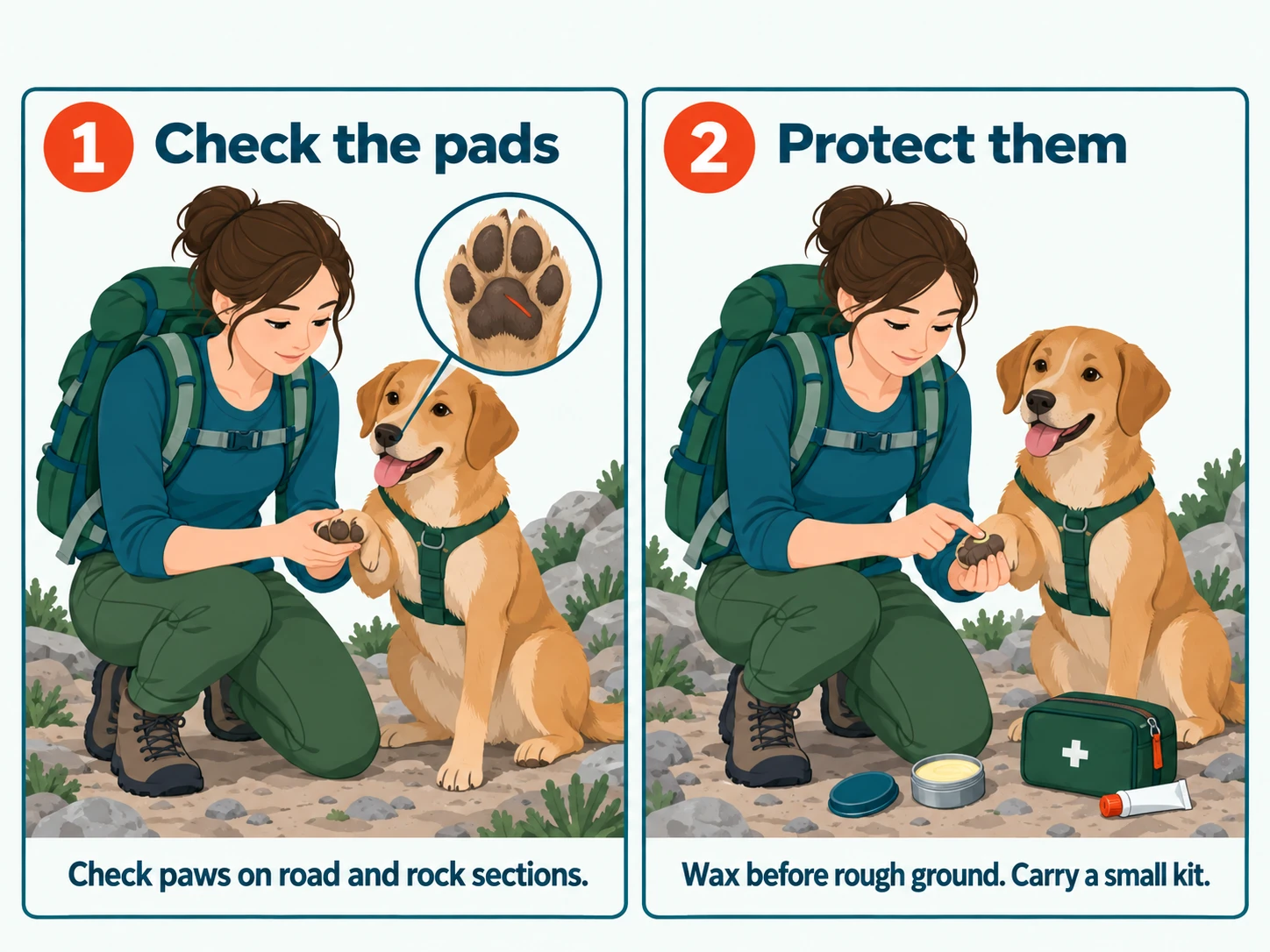
- I carried dog paw wax. Check paws during road and rock sections.
- I also brought a mini tube of super glue in case he got injured. Ask your vet how to use it on a cut pad before you go.
- As of August 2026, BC Transit allows only small pets in a secure handheld carrier. Confirm each shuttle, taxi, boat and accommodation will accept your dog.
My 2026 base weight
These are approximate weights from my pack before food and water. Weigh your own gear.
| Item | Details | Weight | Running total |
|---|---|---|---|
| Tent | Two-person tent shared with my dog | ~5.0 lb | 5.0 |
| Sleeping pad | Inflatable sleeping pad | ~0.9 lb | 5.9 |
| Sleeping bag | −7°C down | ~2.8 lb | 8.7 |
| Pack | 55 L, empty | ~4.0 lb | 12.7 |
| Clothing | Packed clothing | ~3.0 lb | 15.7 |
| Stove, pot, fuel | Stove, pot and one fuel canister | ~1.5 lb | 17.2 |
| Bear kit | spray, dry bag, hang cord | ~1.5 lb | 18.7 |
| Hygiene and camp items | Toiletries and small camp items | ~1.5 lb | 20.2 |
| Filter + bottles | empty | ~1.0 lb | 21.2 |
| First aid + repair | kit, glue, sewing kit | ~1.0 lb | 22.2 |
| Electronics | Battery bank, headlamp and cables | ~1.5 lb | 23.7 |
| Rain jacket | packed most days | ~0.8 lb | 24.5 |
| Base weight | everything except food and water | ~24.5 lb |
Food and water were additional. A litre of water weighs 1 kg (2.2 lb); a full 3 L carry adds 3 kg (6.6 lb).
Gear list
Gear for this trail, with links. The pack and boots are what I used.
Pack and sleep
Water, food and cooking
Clothing and feet
Navigation, power and safety
Health and camp
Dog
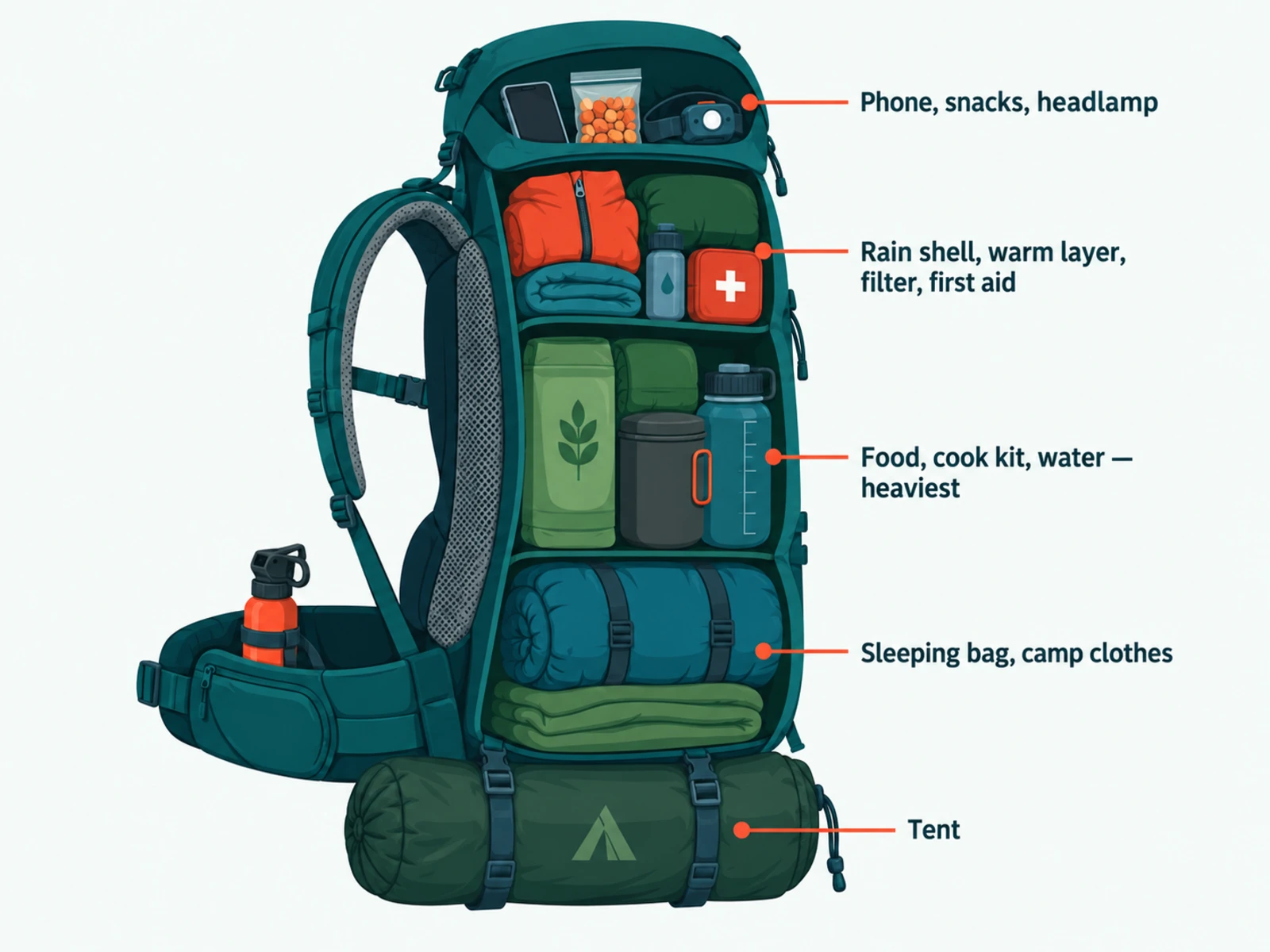
Loading the pack
Heavy things go in the middle, against your back. Weight that sits far from your spine pulls you backward on the climbs.
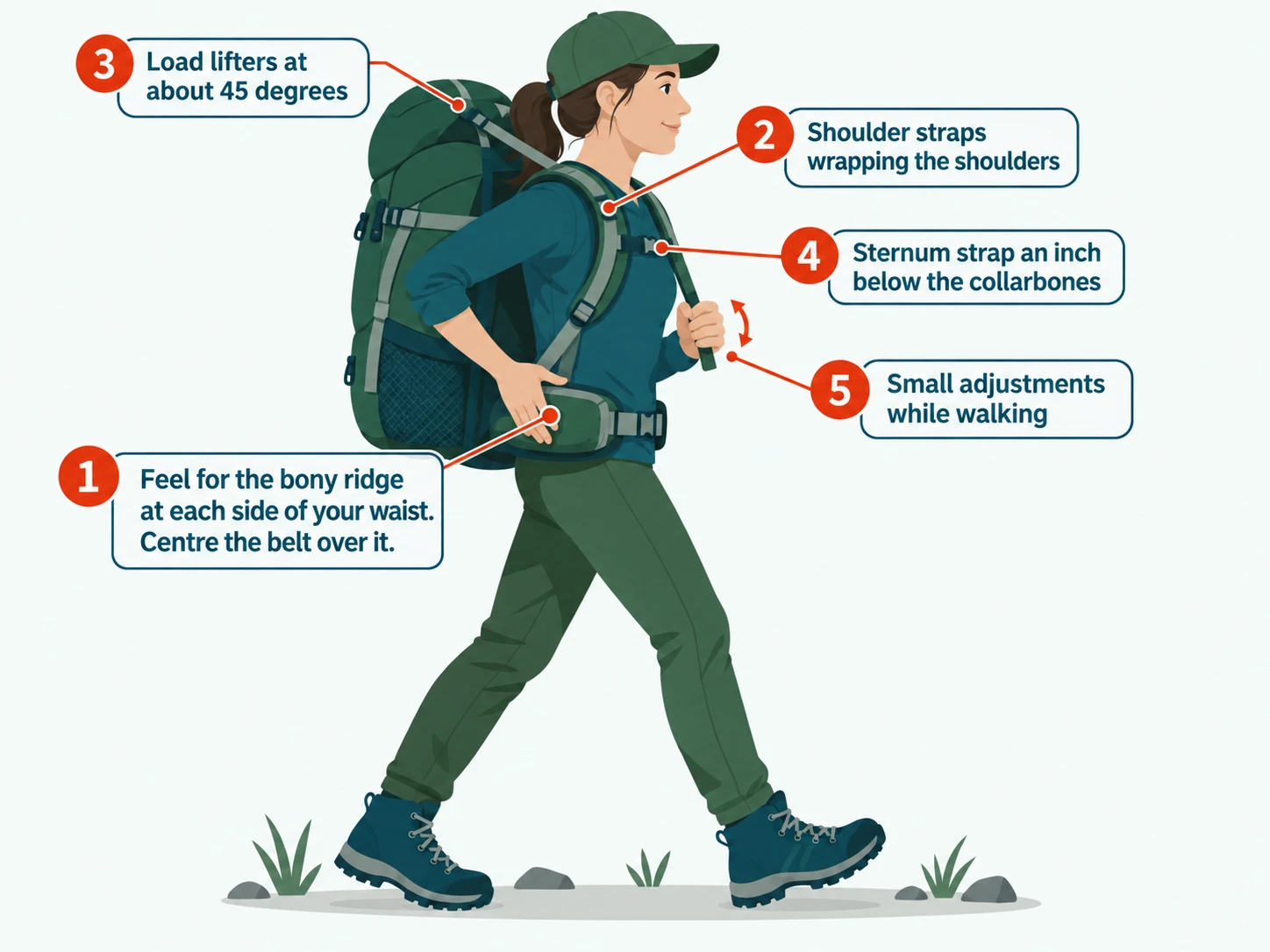
Wearing the pack
The hip belt should carry most of the weight. Your shoulders steady the load. Loosen every strap, put the pack on, then tighten in this order.
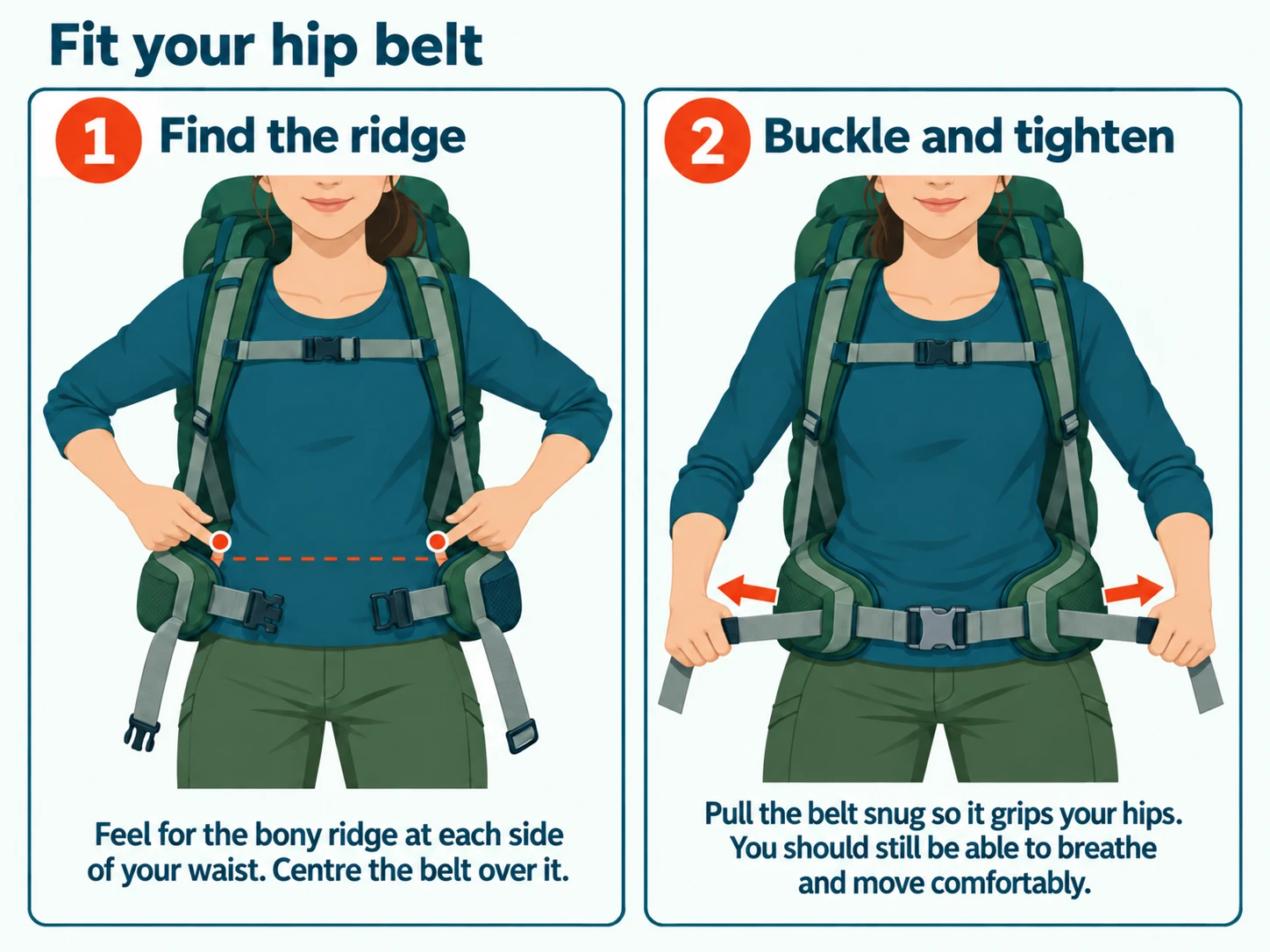
A pack only fits if its torso length matches yours. Have it measured before you buy.
What I’d leave behind
I carried gaiters, a second cook pot, spare town clothes and a hammock. I did not use them.
Ask Shingle Mill Pub before leaving gear there.